
Love
“Being deeply loved by someone gives you strength, while loving someone deeply gives you courage.”
Love surrounds us all, affecting each of us in different ways. The definition of love is difficult to define because it has a wide area of range, showing its complexity and depth. Throughout history philosophers have offered various interpretations. For instance, Plato’s view of love is the pursuit of beauty, while Aristotle’s view was on virtue and friendship. Existential thinkers like Kierkegaard considered love as an ethical act of will, choosing to value the well-being of another. Similarly, psychological theorists like Enrich Fromm asserted that love is a skill to practiced, requiring care, responsibility and discipline. In eastern traditions, love centers on the acceptance of unity and being connected, going beyond the boundaries of the individual ego. On the other hand, evolutionary biology suggest that love evolved to strengthen social bonds and to secure survival. In present society, romantic love is honored, even as feminist theorists critique its entanglement with hierarchy and social constructs. Despite these differing perspectives, love remains a force that forms our sense of self, our relationships, and our understanding of what it means to be human. Reflecting on these various definitions reveals that love is not just an emotion but a intense aspect of human experience, inviting us to grow, connect, and find meaning.
With so many definitions of love, it is natural to wonder how we are meant to give and receive it in our own lives. Reflecting on the various perspectives, from philosophical to psychological, cultural and scientific, reminds me that there is no single right or wrong way to approach love. Rather understanding these different versions allows to consider, which resonate with us the most as individuals. Within these definitions there is some commonality that love involves connection, shared experience, attentive action and genuine care.The more we learn about different definitions of love and examine what love means to us, the more we can approach it with awareness, openness, and curiosity—shaping our relationships and our sense of self in meaningful ways.
There are many forms of love, and we must be aware and understand them all to have healthy and fulfilling relationships. Let’s break down each form of love and how it contributes to our wellbeing.
Romantic Love: Romantic love is the most celebrated form of love in many cultures and very complex. It begins with attraction and infatuation but can develop into a deep lasting bond that matures and transitions into a relationship built on deeper intimacy, shared experiences and mutual respect.
Platonic Love: Platonic love is the deep connection that exists between friends, without any romantic or sexual attraction. Friendships can be as fulfilling and intimate as romantic relationships that offers emotional support, companionship and a sense of belonging.
Familial Love: Familial love is love shared between family members. This type of love plays a significant role in shaping our foundation of love, this is because family often provides the first experience of love that influences how we perceive, how we give, and receive love.
Self-love: Self-love is the practice of appreciating and caring for yourself in ways that encourage personal growth, self-assurance and well-being. It is the cornerstone of all other forms of love because we cannot fully love others unless we first love ourselves.
One effect that starts to develop when you are examining your definition of love is how your childhood experiences shaped love for you. These experiences play a critical role in shaping our capacity to love and form healthy relationships. Attachment theory shows that the bonds we form with our caregivers in early childhood have a lasting impact on our ability to trust, communicate and connect emotionally in adulthood. As children we observe how our caregivers handled conflict, affection, and emotional expression, which influence how we navigate relationships in our life in the long term. The way our caregiver’s modeled love is how we learn to give and receive love in life. These experiences develop our definition of love and when we have deep scars from our childhood it affects how we give and receive love, at times can make intimacy and trust difficult. Even though these early childhood experiences shape us, it’s important to recognize that with self-awareness and healing we can break negative patterns and redefine our definitions of love.
In addition to our childhood shaping our love, our experiences into adulthood, also play a factor in our definition of love. Our childhood lays a foundation of how we first understand love, but our later relationships redefine and reinforce our beliefs about love. If we experienced heartbreak, betrayal, abandonment or abuse it can impact and influence how we approach love. In childhood love is something we receive not within our control but in adulthood we can make conscious choices that make us active participants through our behaviors and choices. The actions, boundaries, and communication directly affect our relationships and if our needs are being met effectively. If we fail to meet our needs, we need to make a choice to either continue familiar patterns or choose new behaviors that align with our definition of love we want to achieve.
We have the choice to move toward growth and healing at any stage of life by choosing differently. It takes self-reflection, intentional boundary setting and support to challenge our beliefs about love and replace them with more effective and healthier beliefs. With this awareness, we gain the ability to name and release toxic expressions of love and choose behaviors that create connection without sacrificing our well-being.
If as a child you grew up in emotionally volatile or neglectful environments it may develop an attachment style that prioritizes control, fear of abandonment, or an intense need for validation and as adults we may enter relationships with a subconscious desire to cling to our partner or manipulate them for love. These traits become unhealthy and must be recognized to redefine the love we share, here are some examples of unhealthy dynamics within loving relationships:
Love as Control: Love as control is a pattern of using love, affection and emotional influence to manipulate or dominate another person’s behavior, emotions or decisions. It stems from insecurity or fear of losing the relationship. The key characteristics are possessiveness, manipulation, jealousy, over protection, or fear of losing control.
Emotional Dependency: Emotional dependency is when an individual relies excessively on a person for emotional support, validation and a sense of self-worth. In this dynamic one person feels they cannot be happy, complete or functional without constant affirmation and attention from the other, which creates an unbalanced relationship, where the dependent person is emotionally reliant and often compromises their own needs or wellbeing. The key characteristics are insecurity, need for constant attention, difficulty with autonomy, or fear of being alone.
Love as Validation: Love as validation occurs when a person seeks love and affection primarily to confirm their own sense of worth and value. Love becomes a way to feel good enough and accepted driven by feelings of inadequacy or low self-assurance. Instead of love being a shared experience, it becomes a form of external validation that reinforces one’s identity. The key characteristics are seeking external affirmation, low self-esteem, people pleasing and insecurity.
Fear of Abandonment: Being fearful of abandonment is when a person fears a loved one will leave or reject the person. It stems from past experiences of abandonment or rejection and may cause anxiety or clinginess within relationships. When a person believes there is a disconnection it activates the fear and enables the person to do things that keeps ahold of the relationship such as over attaching or avoiding conflict.
Conditional Love: conditional love is love that is earned through performance, achievements or adherence to rules and can be withdrawn if you do not meet these expectations. When we have developed a mindset that love is only given when we are good enough, when we do right or are easy to be around, and if we do not meet that benchmark love is withdrawn. It feels as though we had to perform, please, or prove our worth to stay connected.
Confusing Sex with Love: Confusing sex with love is a common when physical intimacy is mistaken for genuine emotional connection. Sex is a meaningful part of a loving relationship, but when it is the foundation, it causes tension in other areas that sex is not involved in. When sex is used as the main form of expression of love it leads to insecurity and a sense that love is conditional becoming a tool for validation or control creating a cycle of believing love only exist when sex does.
In any of the forms of love there can be unhealthy behavior patterns, and if unaddressed begin to normalize unhealthy dynamics into adulthood. These toxic dynamics enable behaviors such as manipulation, fear and resentment making people feel trapped in cycle of unhealthy dynamics. The more time that goes on without addressing the issues, our wellbeing deteriorates leading to anger or loss of identity. It is not fate that leads us to unhealthy relationships, our experiences and actions lead us conscious or not to these relationships. When we recognize these patterns, we are able to empower ourselves to shift from passive participant to active advocates for change in our lives.
CULTIVATING SELF-LOVE
Over the years, I have realized that truly loving others starts with learning to love ourselves. We must first develop a healthy sense of self-love before we can extend healthy love to others. This is the first step toward achieving the love we all desire. If love is about connection and attentiveness to the needs of others, then self-love is about being connected and attentive to ourselves. Being connected to yourself is recognizing your own worth and value, which helps you navigate life. It comes from understanding and accepting yourself to stand firm in your beliefs and authentically engage with the world. Embracing self-love involves defining our standards for living, recognizing our value, and cultivating our abilities. A key aspect of self-love is investing as much energy in connecting with ourselves as we do with others. Think of it as being in a relationship with yourself. Just as you’d want regular affirmation from a loved one, you also need to affirm your love for yourself every day. Ultimately, self-love is nurturing your relationship with yourself every day.
Many people mistake the good feelings they get when loved by others for self-love, but those feelings often come from external validation, not from an internal sense of worth. The confusion arises because both external love and self-love can produce similar emotions, even though they stem from different sources. While it’s common to gauge our worth based on outside factors or other people’s opinions, self-love is about establishing and expressing our own value. By actively defining what love means for ourselves, we remain true to who we are, rather than being swayed by external definitions.
When we act on self-love, we show others how we want to be treated. The way we carry ourselves sets the tone for how others interact with us. People tend to treat you with the same level of love and respect that you show yourself. For instance, if you constantly prioritize others’ needs above your own and never set boundaries, people may begin to take advantage of you or overlook your needs. By neglecting self-love, you teach others that it’s acceptable to treat you this way. That’s why it’s essential to examine your relationship with yourself to cultivate love, receive the care you deserve, and connect with others authentically and meaningfully. Self-love brings clarity and authenticity to our relationships because we’re not relying on others to meet our basic needs. When we understand what we need to feel connected, cared for, and recognized, our love becomes a powerful force that transforms how we relate to both ourselves and the world.
LOVE IS ROOTED IN VALUES
By examining how love has been formed by our experiences, we see that our definition of love is rooted in the values that matter most to us. These values guide how we express and receive love while molding our expectations in relationships. Our values help point us toward the qualities we seek in ourselves and in those we love. They reveal what authentic love looks like and help us recognize when we have found it. When our values resonate with someone else's, the relationship grows into a collaboration established on mutual respect, understanding, and common goals.
When people agree on core values and definitions of honesty, respect, kindness, or loyalty—they create a closer relationship that goes beyond emotions or attraction. Our values guide decisions, shape behaviors, and encourage respect that makes it easier to meet challenges together. They are the foundation that gives each person an opportunity to focus on what's important and move through conflict with understanding instead of division.
A relationship based on common values tends to be more resilient because it provides purpose and direction. When both people understand and respect each other's values, they’re more likely to support each other, which strengthens the relationship. While some differences in values are natural, when these differences are so significant it can create tension that makes a relationship difficult. In these cases, conversations are key to identifying each other’s beliefs and opinions and while collaborating to create ways to grow the relationship together. Ultimately, love that consists of shared values, strengthens the bond and helps it be built on a solid foundation of respect, trust, and growth. By reflecting on what is important to us, we gain clarity about our choices in love and can better understand what kind of connection is best for us.
LOVE IS A CHOICE
Love is more than just a feeling it is woven into the choices we make, the words we speak and the ways we support each other. How we love is a choice, and each day we have the power to shape our relationships through our intentions, words and actions. Love is not passive, it is a conscious decision we make, demonstrating what we feel and how we show up for one another. Love is often a deliberate choice of sacrificing, forgiving and lifting someone else. While the emotion of love forms our connections, it is our actions that give love substance and strength. Acts of encouragement and respect are just as important as the feeling itself in building and maintain strong bonds. For love to truly last, it must be expressed in emotions and through consistent, intentional actions such as words of affirmation, thoughtful gestures, and physical affection. When what we feel and what we do match, love becomes a lasting meaningful bond that sustains and enhances our relationships. Remember every action of love no matter how small has the power to make a difference. Keep choosing love and you will continue to build connections that fulfill and matter.
CONNECTED CONVERSATIONS
Communication is important in every thriving relationship. It’s not just a tool for resolving conflict, it is how we build trust and create connection. Disagreements are inevitable, but choosing respect and collaboration transforms challenges into opportunities for deeper understanding.
Effective communication consists of being direct and clear when expressing your needs. When we are not direct about our needs it creates a space for confusion and assumptions. When you name your feelings and desires, you set the stage for honest conversations that have less misunderstandings and resentment. Instead of expecting others to guess, you take responsibility for your feelings and getting your needs met. For example, say “I’m feeling overwhelmed and need some support.”, to invite your needs to be met rather than blaming or criticizing, such as “You never help me when you see I am overwhelmed.”. When you speak directly and take ownership over your feelings and needs, you nurture a relationship where all people can be seen and fulfilled.
Effective communication isn’t just about speaking it is also about listening and seeking to understand your loved one’s perspective. When we actively listen, we are expressing empathy by setting aside our judgements and truly seeing through their eyes, especially in moments of tension. When you approach conflict with curiosity instead of criticism, you shift the focus from being right to building a common ground. By listening carefully, it enables you to ask clarifying questions, and makes space for your loved one. When this is accomplished, we are giving emotional validation to our loved ones, which is the cornerstone of healthy love. Even when you see things differently you affirm your love for them while creating safety. Saying “I understand why that upset you,” is a powerful way to show empathy and emotional connection. Every moment of empathy and validation, strengthens the foundation of a relationship where both people feel truly seen and heard. When you choose understanding and validation in every interaction, you lay the groundwork for lasting connection and love.
LOVE IS NOT EASY
Love is not always easy and will be difficult at times. Accepting this reality helps us let go of the unrealistic belief that love should always be easy or perfect. One thing that makes love difficult is that we must be vulnerable, even when we have been scarred by love. Love asks us to open up, to risk being truly seen, even if it feels scary. It requires letting someone into aspects of our lives that we rarely share or show others, without putting up defenses. To reach a love that is fulfilling, we must be willing to put down defenses and risk being seen without a filter to help it grow. Vulnerability is what makes a deep connection possible. It takes courage to trust, to share our real selves, and to invite someone else to do the same. Only then can love become truly meaningful and lasting.
Another aspect that makes love challenging is bringing people together and expecting them to align perfectly. This mindset is unrealistic and hinders connection. It takes time to understand and navigate each person's unique needs, desires, and expectations in order to reach genuine alignment. Rushing or forcing this process can actually create more obstacles down the road, making it harder for authentic love to grow. The more effort we put into understanding each other, the better we are at meeting our loved ones where they are. Let me remind you that love doesn't lessen when people don't agree or align; this is love showing its complexity and depth. Love is built when individuals learn to balance these differences with compassion and understanding, rather than reacting with frustration and defensiveness. Yet, it’s through facing these challenges together that love deepens, creating a bond built on understanding, resilience, and genuine connection.
Love is a powerful force that remains with us, even after a relationship ends, which makes it difficult. It is something we nurture, and over time, it becomes a part of who we are. Relationships may end due to unmet needs or incompatibility, the feeling of love does not simply disappear. Letting go of love is not released on the spot. It takes time to let go of the person and the moments you shared to fade from our present. Love lingers until it transforms into a different form that enables our growth and understanding, which then allows us to learn to live with this new, redefined version of love, carrying the experience and memories forward as we move on. Remember, that love always leaves an impact, and this impact takes time to transform love into healing. Trust the process and know that with time, you will gain strength and resilience. This enduring nature of love is proof to its strength and our capacity to cherish connections. It can be difficult but also gives us space to heal and reflect to redefine love as we know it.
EMPOWERED LOVE
Healthy love is an intentional process that honors both your needs and the needs of others. It is rooted in mutual respect and personal responsibility. Boundaries are essential to this dynamic because they define what is emotionally, mentally and physically healthy for each person securing that the relationships remain respectful and fulfilling. Setting boundaries reflects self-awareness and a desire to protect one’s wellbeing. Respecting the needs of others also means understanding and honoring these boundaries, while still caring for your own needs. Healthy boundaries don’t create distance; they build trust and a sense of safety because everyone feels respected and secure. Those who believe that boundaries create distance are those who want control or only want it their way without consideration of other’s needs.
Healthy love also requires a balance of caring deeply for someone else without losing yourself in the process. Healthy love does not demand constant sacrifice or self-neglect, it encourages honest conversations about needs, expectations and feelings, even when they are uncomfortable. Respecting differences, accepting no without resentment and allowing space for individuality are all signs of healthy love. Ultimately, healthy love consists of setting and respecting boundaries while understanding that needs change. This approach creates relationships grounded in mutual respect, emotional safety, and genuine connection.
LOVE DEEPENS WITH TIME
Love in its many forms, grows through intentional choices build on trust, emotional intimacy, and shared experience. It’s not just about the excitement at the beginning, it’s about how we choose to nurture the love every day. It means showing up through both the celebrations and the tough moments to create a relationship that resilient, supportive and deeply connected. Over time love shifts from surface level attraction to something deeper and more authentic. It becomes a safe place for each other, able to be fully seen, accepted and understood. This transformation doesn’t just happen on its own it’s the result of choices you both make and the effort you put in to grow together and honor each other’s needs. The small consistent everyday actions such as spending quality time, offering encouragement or showing appreciation are what keeps love alive and evolving over time. This is what makes the bond meaningful and lasting in addition to the grand gestures. Love is a masterpiece that is never stops being worked on in which is created by the choices we make to build the connection every day.
We are responsible for the direction of our love lives. Your definition of love is a conscious choice, shaped by your unique needs, values, and experiences. Theres no universal definition of love and what matters most is that the meaning you choose resonates with you and supports your personal growth. We have the power to intentionally redefine love to reflect your changing journey as we develop. The more you define what love means to you, the more intended and fulfilling relationships become. Remember love is not always stable, it’s an active, ongoing process of deliberate choices that adapt as you grow. By defining love in a way that honors your needs and encourages growth, you actively choose to give and receive love in authentic and meaningful ways, building deeper more supportive connections.
Download the free Workbook now to deepen your understanding of love and get step-by-step exercises that expand on everything in this blog.
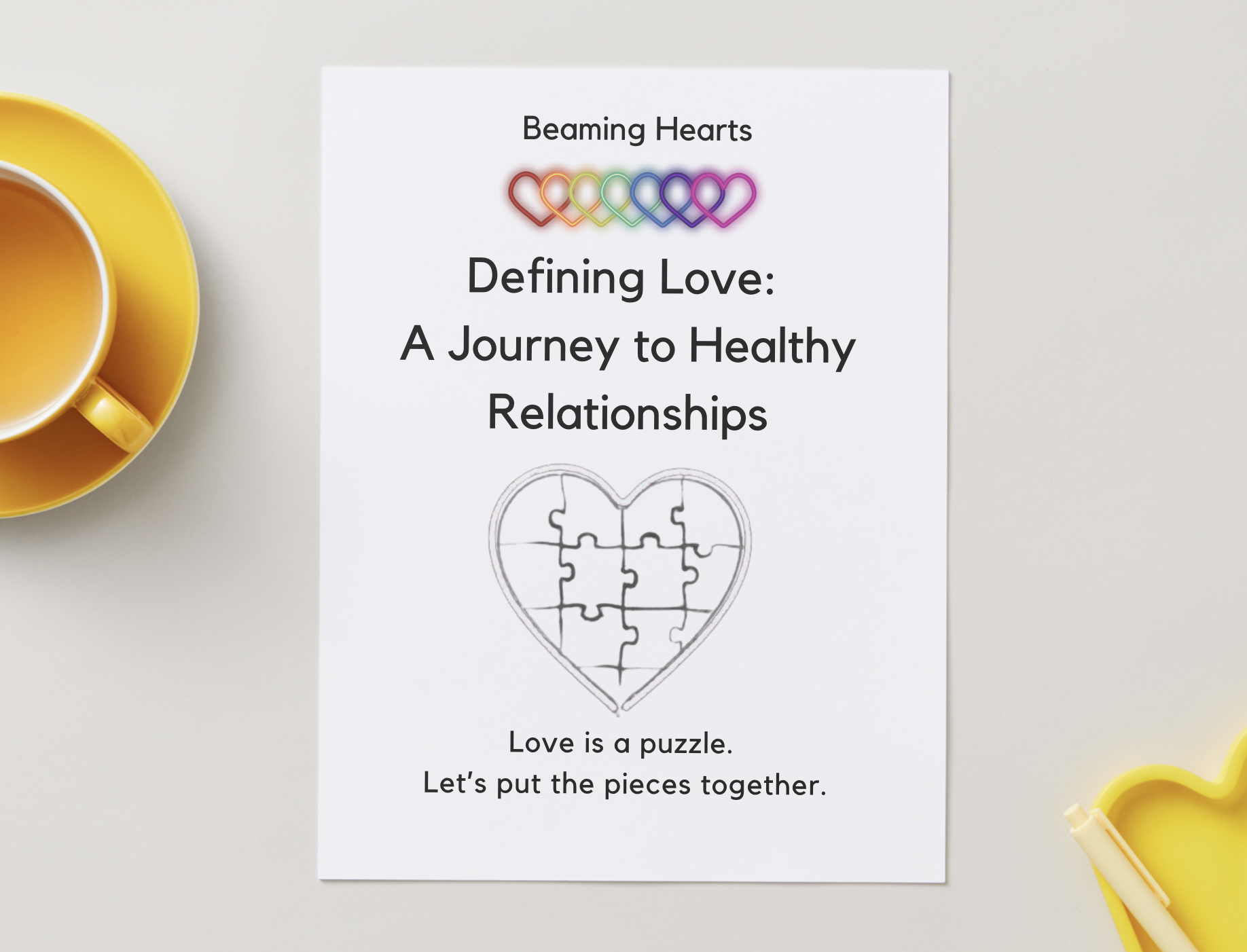
Defining Love is a transformative workbook designed to help you explore, understand, and clearly define what love truly means to you.
Too often, we inherit ideas about love from family, culture, past relationships, and social media—without ever questioning whether those definitions actually align with our values. This workbook guides you through intentional reflection, emotional awareness exercises, and practical prompts that help you:
Identify your core relationship values
Clarify your emotional needs
Recognize unhealthy love patterns
Define boundaries and standards
Create your personal definition of healthy love
Through guided journaling, thought-provoking exercises, and real-life application sections, Defining Love empowers you to build relationships rooted in clarity, self-awareness, and emotional security.
Whether you're single, dating, healing, or committed, this workbook helps you stop guessing what love should look like — and start defining it for yourself.
